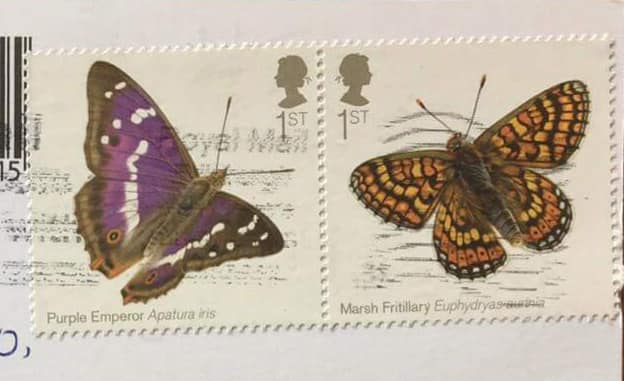
Sent from Germany. Sender: seadra DE-14381940


Avebury (/ˈeɪvbəri/) is a Neolithic henge monument containing three stone circles, around the village of Avebury in Wiltshire, in southwest England. One of the best known prehistoric sites in Britain, it contains the largest megalithic stone circle in the world. It is both a tourist attraction and a place of religious importance to contemporary pagans.
Constructed over several hundred years in the third millennium BC, during the Neolithic, or New Stone Age, the monument comprises a large henge (a bank and a ditch) with a large outer stone circle and two separate smaller stone circles situated inside the centre of the monument. Its original purpose is unknown, although archaeologists believe that it was most likely used for some form of ritual or ceremony. The Avebury monument is a part of a larger prehistoric landscape containing several older monuments nearby, including West Kennet Long Barrow, Windmill Hill and Silbury Hill.
By the Iron Age, the site had been effectively abandoned, with some evidence of human activity on the site during the Roman period. During the Early Middle Ages, a village first began to be built around the monument, eventually extending into it. In the Late Medieval and Early Modern periods, local people destroyed many of the standing stones around the henge, both for religious and practical reasons. The antiquarians John Aubrey and William Stukeley took an interest in Avebury during the 17th century, and recorded much of the site before its destruction. Archaeological investigation followed in the 20th century, led primarily by Alexander Keiller, who oversaw a project which reconstructed much of the monument.
Avebury is owned and managed by the National Trust. It has been designated a Scheduled Ancient Monument, as well as a World Heritage Site, in the latter capacity being seen as a part of the wider prehistoric landscape of Wiltshire known as Stonehenge, Avebury and Associated Sites.
About 480 people live in 235 homes in the village of Avebury and its associated settlement of Avebury Trusloe, and in the nearby hamlets of Beckhampton and West Kennett.[1]


In the 13th century, Richard Óg de Burgh, 2nd Earl of Ulster, built the first castle at Dunluce. It was first documented to be in the hands of the McQuillan family in 1513. The earliest features of the castle are two large drum towers about 9 metres (30 ft) in diameter on the eastern side, both relics of a stronghold built here by the McQuillans after they became lords of the Route. The McQuillans were the Lords of Route from the late 13th century until they were displaced by the MacDonnell after losing two major battles against them during the mid- and late-16th century.
Later Dunluce Castle became the home of the chief of the Clan MacDonnell of Antrim and the Clan MacDonald of Dunnyveg from Scotland. Chief John Mor MacDonald was the second son of Good John of Islay, Lord of the Isles, 6th chief of Clan Donald in Scotland. John Mor MacDonald l was born through John of Islay's second marriage to Princess Margaret Stewart, daughter of King Robert II of Scotland. In 1584, on the death of James MacDonald the 6th chief of the Clan MacDonald of Antrim and Dunnyveg, the Antrim Glens were seized by Sorley Boy MacDonnell, one of his younger brothers. Sorley Boy took the castle, keeping it for himself and improving it in the Scottish style. Sorley Boy swore allegiance to Queen Elizabeth I and his son Randal was made 1st Earl of Antrim by King James I.
Four years later, the Girona, a galleass from the Spanish Armada, was wrecked in a storm on the rocks nearby. The cannons from the ship were installed in the gatehouses and the rest of the cargo sold, the funds being used to restore the castle. MacDonnell's granddaughter Rose was born in the castle in 1613.
A local legend states that at one point, part of the kitchen next to the cliff face collapsed into the sea, after which the wife of the owner refused to live in the castle any longer. According to a legend, when the kitchen fell into the sea, only a kitchen boy survived, as he was sitting in the corner of the kitchen which did not collapse. However, the kitchen is still intact and next to the manor house. You can still see the oven, fireplace and entry ways into it. It wasn't until some time in the 18th century that the north wall of the residence building collapsed into the sea. The east, west and south walls still stand.
Dunluce Castle served as the seat of the Earl of Antrim until the impoverishment of the MacDonnells in 1690, following the Battle of the Boyne. Since that time, the castle has deteriorated and parts were scavenged to serve as materials for nearby buildings.


In Outlander it featured as the infamous Wentworth prison where Jamie Fraser was incarcerated and tortured by Black Jack Randall.